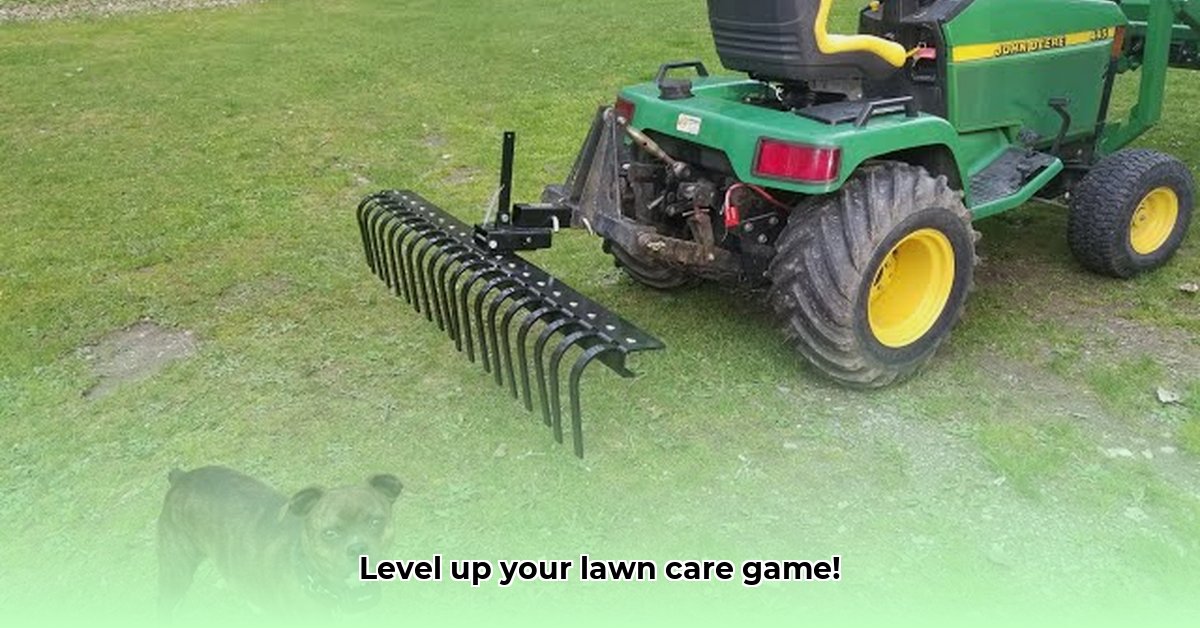
Choosing the right landscape rake for your lawn tractor can significantly improve efficiency and reduce manual labor. This guide provides a step-by-step approach to selecting, installing, and maintaining a landscape rake, ensuring you make an informed decision based on your specific needs and budget. For more on tractor lifting capacity, see this helpful resource: tractor lift capacity.
Understanding Your Needs: Matching Rake to Tractor and Task
Before browsing models, assess your tractor's capabilities and define your landscaping tasks. This crucial step prevents costly mistakes and ensures optimal performance.
1. Tractor Compatibility: A Critical First Step
Your tractor's owner's manual dictates compatibility. Crucially, check the horsepower rating and the three-point hitch category (Category 0, 1, or 2). The rake must match these specifications precisely. Using an incompatible rake can lead to equipment damage or, worse, injury. Think of it like trying to fit a square peg in a round hole – it just won't work.
2. Defining Your Primary Tasks: The Right Tool for the Job
Different tasks require different rake designs. Consider these common applications:
Seedbed Preparation: For creating a smooth, even seedbed, a rake with closely spaced, fine tines is essential. This ensures optimal seed-to-soil contact for germination. The finer the tines, the smoother the finish.
Debris Removal: To efficiently clear leaves, twigs, and other debris, a rake with widely spaced, heavy-duty tines is more suitable. This configuration allows better material flow and reduces clogging.
Rock Removal: Removing rocks requires a robust rake with heavy-duty, reinforced tines capable of withstanding significant impact. This is crucial for preventing damage and ensuring efficient clearing.
Leveling: For smoothing uneven terrain, a heavier rake, possibly with adjustable tine angles, is best. This allows for effective material redistribution and creates a uniform surface.
3. Budget Considerations: Balancing Cost and Quality
Landscape rakes vary significantly in price. While budget-friendly options exist, investing in a high-quality rake offers superior durability and longevity. This long-term cost-effectiveness outweighs the initial higher expense, similar to investing in professional-grade tools vs. cheaper alternatives.
Exploring Rake Models: A Concise Overview
While a comprehensive review of all models is beyond this guide's scope, knowing some key characteristics will aid your search. Major retailers like Tractor Supply Co. and Home Depot offer a range of options.
Heavy-Duty Rakes: Designed for extensive use and demanding conditions, these rakes prioritize durability and strength. Expect a higher price reflecting their robust construction and longevity.
Light-Duty Rakes: Suitable for smaller properties and lighter tasks, these models provide affordability but may compromise on longevity and heavy-duty applications.
Selection Process Summary: A Decision Tree
To ensure you choose the right rake, follow these steps:
- Assess Tractor Compatibility: Check your tractor's horsepower and three-point hitch.
- Identify Primary Tasks: Determine your main use (seedbed prep, debris removal, etc.).
- Set a Budget: Establish your price range.
- Research Models: Explore options from retailers, comparing features based on your needs.
- Read Reviews: Consult user reviews to understand real-world performance and durability.
Installation and Maintenance: Ensuring Longevity
Installing a landscape rake generally involves attaching it to your tractor's three-point hitch. Refer to your rake's instruction manual for detailed guidance. Routine maintenance, including lubricating moving parts and storing the rake properly during off-season, is crucial for extending its life.
Safety Precautions: Prioritizing Safe Operation
Operating a tractor with a landscape rake requires caution. Always wear appropriate safety gear (safety glasses, hearing protection, etc.), and familiarize yourself with both the tractor and rake manuals' safety guidelines. Never operate heavy equipment without proper training.
Conclusion: Making an Informed Decision
Selecting the right landscape rake involves careful consideration of your tractor's capabilities, the intended tasks, and your budget. By following this guide, you can confidently choose a rake that enhances your efficiency and productivity while prioritizing safety. Remember to consult your tractor's and rake's manuals for specific guidance and always prioritize safe operating procedures.